How the types differ
Most wine-room projects can be described by four decisions: how much of the space is enclosed, whether it is passive(no dedicated cooling) or active (dedicated cooling with a designed envelope), how much the collection is meant to be seen, and how many bottles it must hold. The types below are common combinations of those decisions. Many real projects blend two of them, for example a glass wine room with a small tasting counter, or a passive display wall beside a conditioned closet.
The terms in the market are used loosely. Here a wine room is any enclosed or partly enclosed space for storing or displaying wine; a wine cellar usually implies a dedicated storage environment; a wine wall is a wall-scale system that may be open or enclosed; and racking is the bottle-support system, not the whole project. For more on the naming, seewine room versus wine cellar.
The eleven types
Passive wine wall
A passive wine wall is racking mounted on or against an existing wall, with no enclosure and no dedicated cooling. It is the most common way to bring a collection into a dining room, kitchen, hallway, or stair landing, and it is the simplest of these projects to build. Metal peg and rail systems, frame-supported metal racks, and modular wood are all used.
Because the wall shares the home’s air, its conditions follow the house. A wall away from windows, fireplaces, ovens, and exterior walls will be steadier than one beside them. It suits bottles that will be enjoyed within a reasonable time more than long-term storage, and it should not be described as a controlled environment.
Capacity depends heavily on how bottles are shown. Label-forward rows look striking but hold far fewer bottles per foot than cork-forward storage; a mixed layout is often the practical compromise.
- Passive or active
- Usually passive
- Main cost drivers
- Bottle count, display style, finish, wall substrate, lighting.
- Common starting band
- Passive wine wall or racking display: $1,000–$10,000+, depending on scope
- In the planner
- Passive wine wall or display. Estimates racking, lighting, and installation; ambient conditions are not controlled.
Enclosed wine wall
An enclosed wine wall places a shallow, built enclosure in front of the racking, usually with a glass front and door. It reads as architecture rather than furniture and protects bottles from dust and casual handling.
It can be passive or cooled. Once cooling is added, a small enclosure with a large glass face becomes a demanding thermal problem: the glass, seals, door, and compact equipment have to be designed together, and somewhere nearby must accept the heat the equipment rejects. Professional glass and cooling review is required.
Depth is the main capacity constraint. Shallow enclosures often limit racking to one bottle deep, and the glass frame and returns take some width at each end.
- Passive or active
- Passive or active
- Main cost drivers
- Glass front and door, compact cooling, racking density.
- Common starting band
- Professionally installed wine wall or compact room: $15,000–$40,000+, depending on scope
- In the planner
- Enclosed wine wall or closet. Estimates glass, door, compact cooling budget, and racking; glass and cooling design need professionals.
Climate-controlled walk-in room
A walk-in room is a dedicated space with its own insulated, air-sealed envelope and dedicated cooling. It is the type most people mean by “wine cellar”, though it does not need to be below grade.
The room envelope does much of the work. Insulation, a vapor-control strategy suited to the climate, a sealing door, and careful treatment of penetrations reduce the heat load before any equipment is chosen. Equipment selection then depends on a final heat-load calculation, on where heat can be rejected, and on how much noise is acceptable nearby.
With racking on several walls and room for bins or case storage, walk-in rooms offer the most flexibility between display and density. Doors, cooling grilles, switches, and any counter or cabinetry reduce the usable rack face.
- Passive or active
- Active
- Main cost drivers
- Envelope work, cooling system, racking capacity, door.
- Common starting band
- Climate-controlled wine room: $35,000–$100,000+, depending on scope
- In the planner
- Climate-controlled walk-in room. Screens cooling complexity and envelope scope; final heat load and equipment need professional design.
Glass wine room
A glass wine room uses one or more major glass walls, sometimes a full glass box, so the collection is seen from a living, dining, or entry space. Framed insulated-glass systems and frameless systems are both used, and they behave differently in cost and in thermal performance.
Glass generally adds heat load compared with an insulated opaque wall, and a cool room behind glass facing a humid space carries condensation risk. Neither framed nor frameless glass is always right or always wrong; the outcome depends on the assembly, the surrounding room, local climate, and the cooling design. Glass, door, structure, and cooling should be coordinated from the start.
Every glass wall is a wall without racking, so glass rooms usually hold fewer bottles than an opaque room of the same size. Display rows and lighting tend to take a larger share of the remaining walls.
- Passive or active
- Usually active
- Main cost drivers
- Glass area and type, door, cooling load, condensation risk.
- Common starting band
- Custom glass or luxury wine room: $45,000–$250,000+, depending on scope
- In the planner
- Glass-enclosed wine room. Estimates glass by area and flags cooling scrutiny; no glass engineering or condensation guarantee.
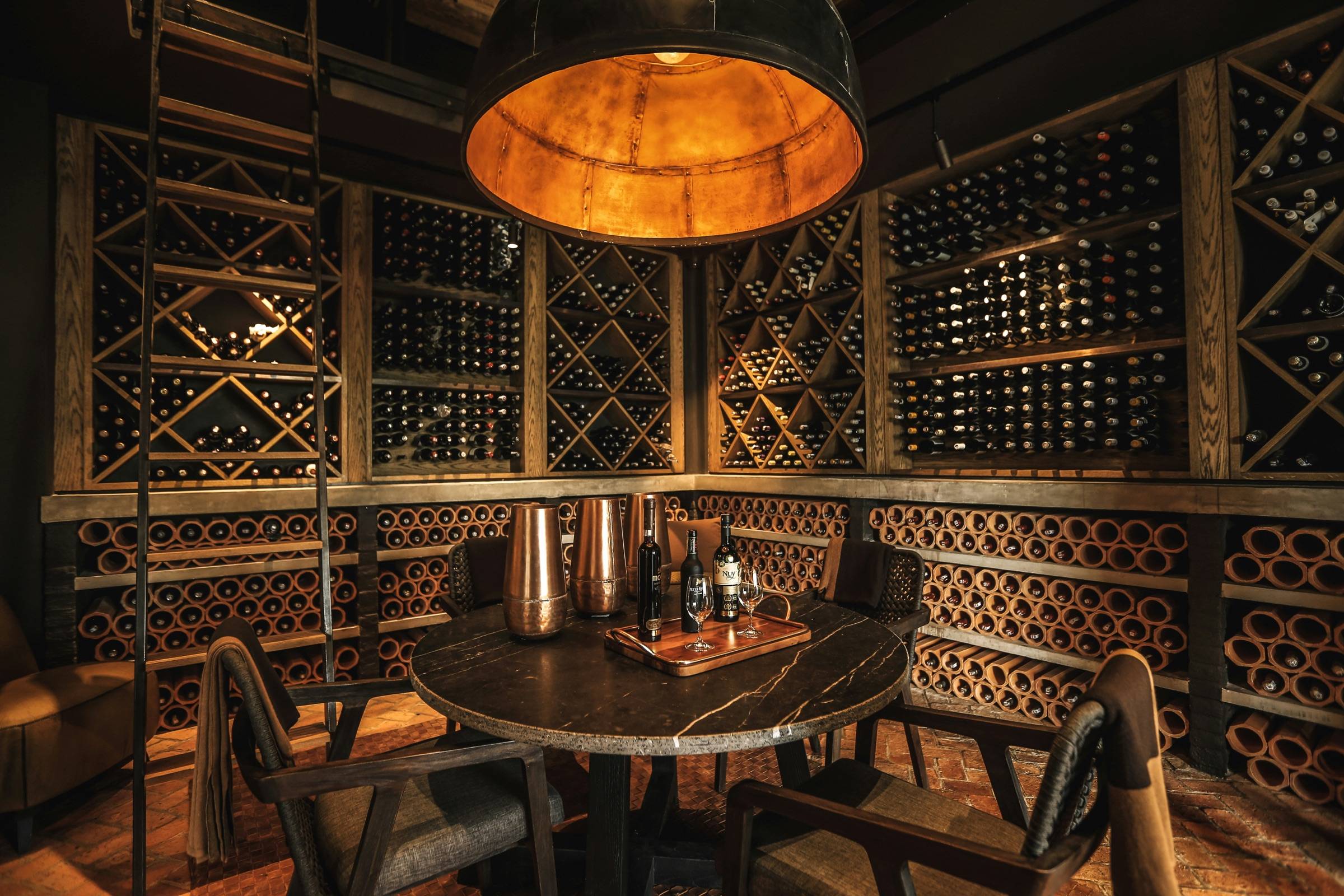
Traditional wood cellar
A traditional wood cellar is built from modular or custom wood racking: individual-bottle cubbies, diamond and rectangular bins, case storage, display rows, and sometimes lockers or a tabletop. It is usually the densest way to store a mixed collection.
It may be passive in a naturally steady space, or actively cooled with a full envelope. Wood species, finish, and whether the racking is modular or custom-fitted move the cost substantially; so do arches, crown details, and lighting integrated into the racks.
An exact module count needs a manufacturer layout for the measured room, particularly where walls are out of square or ceilings are uneven.
- Passive or active
- Passive or active
- Main cost drivers
- Wood species and finish, density, cooling, envelope.
- Common starting band
- Climate-controlled wine room: $35,000–$100,000+, depending on scope
- In the planner
- Traditional wood wine cellar. Estimates by system family; exact module counts need a manufacturer layout.
Under-stair wine display
The space below a stair is often unused, and a wine display can turn it into a feature. Open displays, glass-fronted alcoves, and stepped racking that follows the stair are all common.
The sloped ceiling and irregular footprint mean capacity is lower than the floor area suggests, and racking usually needs custom fitting or careful selection of modular pieces. Stair structure must not be modified without professional review.
Most under-stair displays are passive. Cooling is possible but harder, because the space is small, surrounded by living areas, and may offer little room for equipment or heat rejection.
- Passive or active
- Usually passive
- Main cost drivers
- Irregular geometry, custom fitting, glass front, lighting.
- Common starting band
- Passive wine wall or racking display: $1,000–$10,000+, depending on scope
- In the planner
- The planner uses a simplified under-stair profile and widens the capacity range to reflect irregular geometry.
Wine closet
Converting an existing closet is one of the most efficient ways to gain storage because the walls and door opening already exist. A passive closet may need only racking, lighting, and a better door.
Turning a closet into a conditioned space is more involved: insulating and air-sealing the walls and ceiling, fitting an insulated, sealing door, adding a dedicated circuit, and finding where cooling equipment can reject heat. A closet on an exterior wall or near a heat source carries a higher load than one surrounded by conditioned rooms.
With racking on three walls and little circulation space needed, closets can hold a surprising amount for their size.
- Passive or active
- Passive or active
- Main cost drivers
- Door replacement, insulation if cooled, racking fit, electrical
- Common starting band
- Professionally installed wine wall or compact room: $15,000–$40,000+, depending on scope
- In the planner
- In the planner, choose “Enclosed wine wall or closet”.
Wine cabinet
A wine cabinet is a furniture-like or appliance-like enclosure, generally much smaller than a room. Many are self-contained refrigerated units; others are unconditioned cabinetry with racking inside.
Cabinets are a sensible answer for smaller collections or where construction is not wanted. Built-in refrigerated units have ventilation and clearance requirements set by the manufacturer, and their rated capacity assumes a reference bottle.
Wine cabinets sit outside the planner unless they form part of a larger room project; the product’s own specifications are the best guide.
- Passive or active
- Self-contained; varies by product
- Main cost drivers
- Product selection, built-in trim, electrical
Display room
A display room is designed primarily for presentation. Label-forward and vertical displays, backlit panels, stone or metal finishes, and generous lighting make the collection the subject of the room.
Display priorities reduce capacity, sometimes by more than half compared with dense storage in the same space. If the collection also needs long-term storage, a common approach pairs a display room with denser storage elsewhere, or blends display rows with cork-forward storage on less visible walls.
Lighting matters both visually and thermally. Low-heat sources and controls are worth planning early, particularly if the room is enclosed or cooled.
- Passive or active
- Often passive; sometimes conditioned
- Main cost drivers
- Display racking, lighting, finishes, glass if enclosed
- Common starting band
- Professionally installed wine wall or compact room: $15,000–$40,000+, depending on scope
- In the planner
- In the planner, set the storage priority to “display” within the project type that matches your enclosure.
Mixed-use tasting room
A tasting room combines wine storage with a counter, seating, glassware storage, and sometimes a sink or under-counter refrigeration. It is as much a hospitality space as a storage space.
The conditions that suit long-term storage are rarely comfortable for sitting. Many tasting rooms therefore separate a conditioned storage zone, often behind glass, from a seating area kept at ordinary room conditions. That separation adds glass, doors, and coordination.
Counters, cabinetry, and circulation consume wall area that would otherwise hold racking, so capacity per square foot is lower and finish budgets tend to be higher.
- Passive or active
- Often split: conditioned storage, comfortable seating area
- Main cost drivers
- Cabinetry, countertops, plumbing if added, separate climate zones
- Common starting band
- Custom glass or luxury wine room: $45,000–$250,000+, depending on scope
- In the planner
- Climate-controlled walk-in room. Screens cooling complexity and envelope scope; final heat load and equipment need professional design.
Racking-only retrofit
Sometimes the room shell and cooling already exist and only the racking is changing, either to increase capacity, replace worn racks, or shift the balance toward display.
The cost centers on the racking system, finish, freight, and installation. The existing envelope and cooling still deserve a look: added glass, lighting, or door changes can alter the heat load, and an older system’s capacity and condition should be confirmed by a technician.
Measure carefully. Existing rooms are often out of square, and outlets, grilles, and thermostats interrupt racking runs.
- Passive or active
- Existing
- Main cost drivers
- Capacity, product family, finish, freight, installation.
- Common starting band
- Passive wine wall or racking display: $1,000–$10,000+, depending on scope
- In the planner
- Racking for an existing cellar. Focuses on storage, product, and installation; existing envelope and cooling are marked for verification.
These are manufacturer- and builder-published planning examples, not independent national averages or project quotes. Scope definitions vary.
Comparison table
The table summarizes the same eleven types side by side. Capacity notes are relative; actual capacity depends on the manufacturer, the rack depth, and your bottle mix.
| Project type | Typical purpose | Passive or active | Visual emphasis | Capacity behavior | Main cost drivers | Principal planning risks |
|---|---|---|---|---|---|---|
| Passive wine wall | Display and everyday access in a living space | Usually passive | High: bottles become part of the wall | Moderate; drops sharply with label-forward display | Bottle count, display style, finish, wall substrate, lighting. | Ambient swings, sun and heat sources, wall attachment |
| Enclosed wine wall | Display behind glass, with the option of compact cooling | Passive or active | High: a glass-fronted feature wall | Moderate; limited by shallow depth and glass returns | Glass front and door, compact cooling, racking density. | Cooling a shallow glazed box, condensation, door seals |
| Climate-controlled walk-in room | Long-term storage with room to browse | Active | Moderate to high, depending on finishes | High; several racked walls and dense storage options | Envelope work, cooling system, racking capacity, door. | Envelope quality, heat rejection, noise, condensate |
| Glass wine room | An architectural centerpiece that also stores wine | Usually active | Very high: the collection is visible from adjoining rooms | Lower per square foot; glass walls carry no racking | Glass area and type, door, cooling load, condensation risk. | Heat gain through glass, condensation, structure, sealing |
| Traditional wood cellar | Dense, organized storage with a classic character | Passive or active | Warm and textural; less about individual labels | High; cubbies, bins and case storage are space-efficient | Wood species and finish, density, cooling, envelope. | Wood choice for the conditions, layout fit, envelope if cooled |
| Under-stair wine display | Using leftover space for a visible collection | Usually passive | High: a feature in a circulation space | Limited by the sloped ceiling and irregular shape | Irregular geometry, custom fitting, glass front, lighting. | Irregular geometry, stair structure, limited room for equipment |
| Wine closet | Compact storage in an existing small room | Passive or active | Low to moderate, unless a glass door is added | Moderate to high for the size when racked on several walls | Door replacement, insulation if cooled, racking fit, electrical | Heat rejection into adjoining rooms, door sealing, ventilation of equipment |
| Wine cabinet | Furniture-scale or appliance-scale storage | Self-contained; varies by product | Moderate; reads as furniture or an appliance | Fixed by the product rating | Product selection, built-in trim, electrical | Ventilation clearances for built-in units, product rating vs. real bottle mix |
| Display room | Presentation first, with storage secondary | Often passive; sometimes conditioned | Very high: lighting, finishes and label-forward racking | Lower; display rows trade density for visibility | Display racking, lighting, finishes, glass if enclosed | Lighting heat and UV, capacity shortfall, unmet storage expectations |
| Mixed-use tasting room | Storage plus a place to open, pour and sit | Often split: conditioned storage, comfortable seating area | High: cabinetry, counters and seating | Reduced by counters, cabinetry and circulation | Cabinetry, countertops, plumbing if added, separate climate zones | Conflict between wine conditions and human comfort, scope creep |
| Racking-only retrofit | New or additional racking in an existing room | Existing | Depends on the system chosen | Set by the existing room and the new system | Capacity, product family, finish, freight, installation. | Unverified existing envelope or cooling, fit to existing walls |
Choosing a type
Start with how the collection is used rather than with a picture. A household that buys by the case and drinks within a year or two has different needs from a collector holding bottles for a decade. The first may be well served by a passive wall or closet; the second will usually want a conditioned room with a proper envelope.
- If presentation matters most, look at passive walls, display rooms, and glass rooms, and accept lower capacity per square foot.
- If capacity matters most, wood cellars, closets, and walk-in rooms with cubbies, bins, and case storage use space efficiently.
- If long-term storage matters, plan an envelope and dedicated cooling, whichever visual type you choose, and budget for a professional heat-load calculation.
- If the space is irregular, such as under a stair or in an attic-adjacent room, expect custom fitting and wider capacity and cost ranges.
- If you are not building a room, a racking-only retrofit or a wine cabinet may meet the need with far less construction.
Budget bands
Each type tends to start in one of four published planning bands, and can rise into the next band as glass, cooling, construction, and finishes are added. These bands were last reviewed in October 2026.
- Passive wine wall or racking display: $1,000–$10,000+
- Professionally installed wine wall or compact room: $15,000–$40,000+
- Climate-controlled wine room: $35,000–$100,000+
- Custom glass or luxury wine room: $45,000–$250,000+
These are manufacturer- and builder-published planning examples, not independent national averages or project quotes. Scope definitions vary.
For how these bands break down, see the wine room cost guide, theglass wine room cost guide, and the capacity guide.
Sources
Budget bands are synthesized from these published examples. Inclusion does not imply affiliation or endorsement.
- VintageView’s wine-cellar budgeting and value guide
- VintageView metal wine rack catalog
- Wine Racks America’s wood wine-cellar kits
- Wine Racks America’s wood wine rack price guide
- Dragon Cellars on custom wine-cellar cost
- Vineyard Wine Cellars’ glass wine-room doors and enclosures
See all sources, with links and verification dates.
Independence and limits. Design My Wine Room is an independent planning resource, not a manufacturer, contractor, glazier, or cooling designer. Estimates, capacity ranges, and cooling guidance are preliminary planning information—not quotes, guarantees, or engineering. Final decisions must be confirmed by qualified local professionals and the applicable manufacturers.